


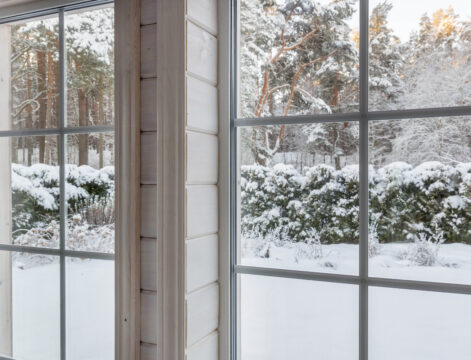
You are snuggled under a blanket reading a book when a cold draft hits you out of nowhere. While you glance at the glass and assume it’s the window itself failing, the real story is usually more complicated.
Temperature swings, aging materials and installation gaps all work together to let outside air inside, and each cause requires a different fix. Understanding what’s actually happening behind your window frame can save you from an unnecessary replacement or help you catch a problem before it gets worse.
At Berg Home Improvements, our team understands how your whole house works together and can discuss which components may be in need of an upgrade.
Why Do Window Frames Contract in Cold Weather?
Window frames expand and contract with temperature changes, and vinyl and wood frames are especially sensitive to this movement. As the mercury drops, frame materials shrink slightly, which can open small gaps between the frame and the surrounding structure. These gaps rarely show up as an obvious crack. Instead, they reveal themselves as a faint, persistent chill that seems to come from nowhere.
Cheaper window materials tend to expand and contract more dramatically than higher-quality options, which is why some homes develop seasonal drafts that disappear once spring arrives. If a window only drafts during extreme cold, frame contraction is often the culprit.
Where Do Hidden Air Leaks Form Around Trim and Casing?
Not every leak happens at the window itself. The trim and casing around a window cover the gap between the frame and the wall, and that gap needs proper insulation and sealing to do its job. Over time, the insulation behind the casing can settle, shift or compress, leaving an open channel for outside air.
Because this gap sits behind the visible trim, it’s one of the easiest leak sources to miss during a quick inspection. A homeowner might run a hand along the window edge and feel nothing, while cold air is still moving through the wall cavity just out of reach.
How Does Worn Weatherstripping Let Cold Air Inside?
Weatherstripping forms the seal between a window’s moving parts, and like any material exposed to friction and weather, it wears out. Compressed, cracked or brittle weatherstripping loses its ability to block air, even if the rest of the window is in excellent condition.
This is often the fastest problem to diagnose. Run a hand around the edges of the sash on a cold day. If you feel air movement specifically where the window opens and closes, worn weatherstripping is a likely cause, and it’s also one of the simpler repairs available.
Why Do Window Sills and Surrounding Materials Feel Cold?
Even a perfectly sealed window can feel drafty if the sill and surrounding materials conduct cold efficiently. Wood, stone and some composite sills absorb outside temperatures and transfer that cold into the room, creating a chill that has nothing to do with air leakage at all.
This is a useful distinction for homeowners to understand: a cold sill doesn’t always mean air is getting in. Sometimes it simply means the material is doing what materials do when the temperature outside drops.
Getting to the Real Source of a Draft
A drafty window rarely has one single cause. Frame contraction, hidden insulation gaps, worn seals and heat-conducting sills can all contribute at once, which is why DIY fixes sometimes help a little without solving the problem completely. If you’ve worked through the usual troubleshooting steps and a window still feels cold, it may be time to bring in a professional who can inspect the frame, casing and surrounding wall together rather than treating each symptom separately.
Connect with Berg Home Improvements for assistance determining what issues need to be fixed.
Please call us to discuss your upcoming projects.
Recent Posts
-
-

Oct 25,2026
-